Future of Cities Coalition panel at the 6th Convention of Family-Friendly Municipalities
On 12 November, the Future of Cities Coalition hosted a panel at the 6th Convention of the European Network of Family-Friendly Municipalities in Alcobendas, Madrid.
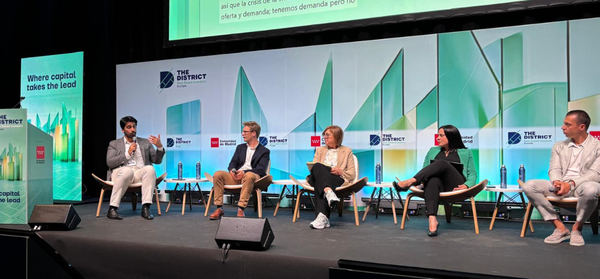
On 12 November, the Future of Cities Coalition hosted a panel at the 6th Convention of the European Network of Family-Friendly Municipalities in Alcobendas, Madrid. Moderated by Virginia Perez Nieto, the panel “Shrinking spaces for families: how to make room to live, move and visit” explored what the city of the future must offer the families who live in it, move around it and visit it.
Diana Grzimolovska (Irish Large Families Association) opened the discussion with the realities faced by large families. Drawing on personal experience, she explained that large families living in cities are often the first to struggle to find homes that suit their specific needs.
Josianne Cutajar, Chair of the Future of Cities Coalition, presented the Coalition as a horizontal initiative bringing together municipalities, industry, NGOs and policymakers around a holistic approach to urban planning, mobility, housing and social policies. She argued that housing policy must look beyond affordability to the wider living environment, including walkable neighbourhoods, safety, accessibility and resilience to climate and infrastructure challenges. Drawing on her early experience as a local politician, she stressed the need to break down policy silos so that social dimensions are built into governance. She added that expanding hosting options outside city centres can help ease urban overcrowding, and outlined the Coalition’s work with Germany’s Fraunhofer Institute to generate cross-sector, evidence-based research across transport and essential services.
Speaking on behalf of the European Network of Family-Friendly Municipalities, Regina Maroncelli further underlined the principle at the heart of this work: human-centric cities must be designed for people, rather than expecting people to adapt to the cities.
Finally, Andrea Vota (Airbnb) highlighted the role digital platforms play in providing flexible housing tailored to families. Beyond leisure travel, he pointed to support for families at critical moments, such as medical stays through Airbnb.org in partnership with local NGOs, and during natural disasters. He also noted that sharing insights with municipalities can support data-driven policymaking, and that spreading tourism beyond cities brings economic activity to rural and remote communities, with 60% of Airbnb stays taking place outside urban areas.
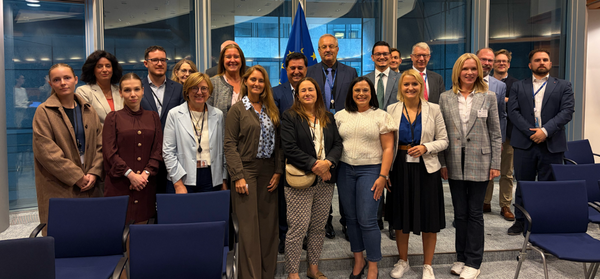
The session brought together a diverse audience of stakeholders and municipal representatives, including a Director General from the Madrid municipality and delegates from Alcobendas, Tres Cantos, Orihuela, Alghero, Piacenza, Miranda do Corvo, Cluj-Napoca and the Trento region, as well as government representatives from Lithuania.